7 Research-Backed Anxiety Management Techniques (2026)

The Anxiety Epidemic: What 2026 Research Is Telling Us
You're not imagining it — anxiety is genuinely more prevalent than ever. According to the World Health Organization, anxiety disorders now affect approximately 301 million people worldwide, making them the single most common mental health condition on the planet. A 2024 American Psychological Association survey found that 77% of adults regularly experience physical symptoms caused by stress, and that figure has trended upward each year since 2020.
But here's the encouraging part: the science of anxiety management has also never been stronger. Researchers now have a much clearer picture of which interventions actually shift the nervous system — and which ones are just noise. This guide walks through seven techniques with the strongest evidence base, and how to put them into practice today.
Note: These strategies are evidence-based complements to professional care, not replacements. If anxiety is significantly impairing your daily life, please consult a qualified mental health professional.
1. Diaphragmatic (Box) Breathing: Your Fastest Anxiety Reset
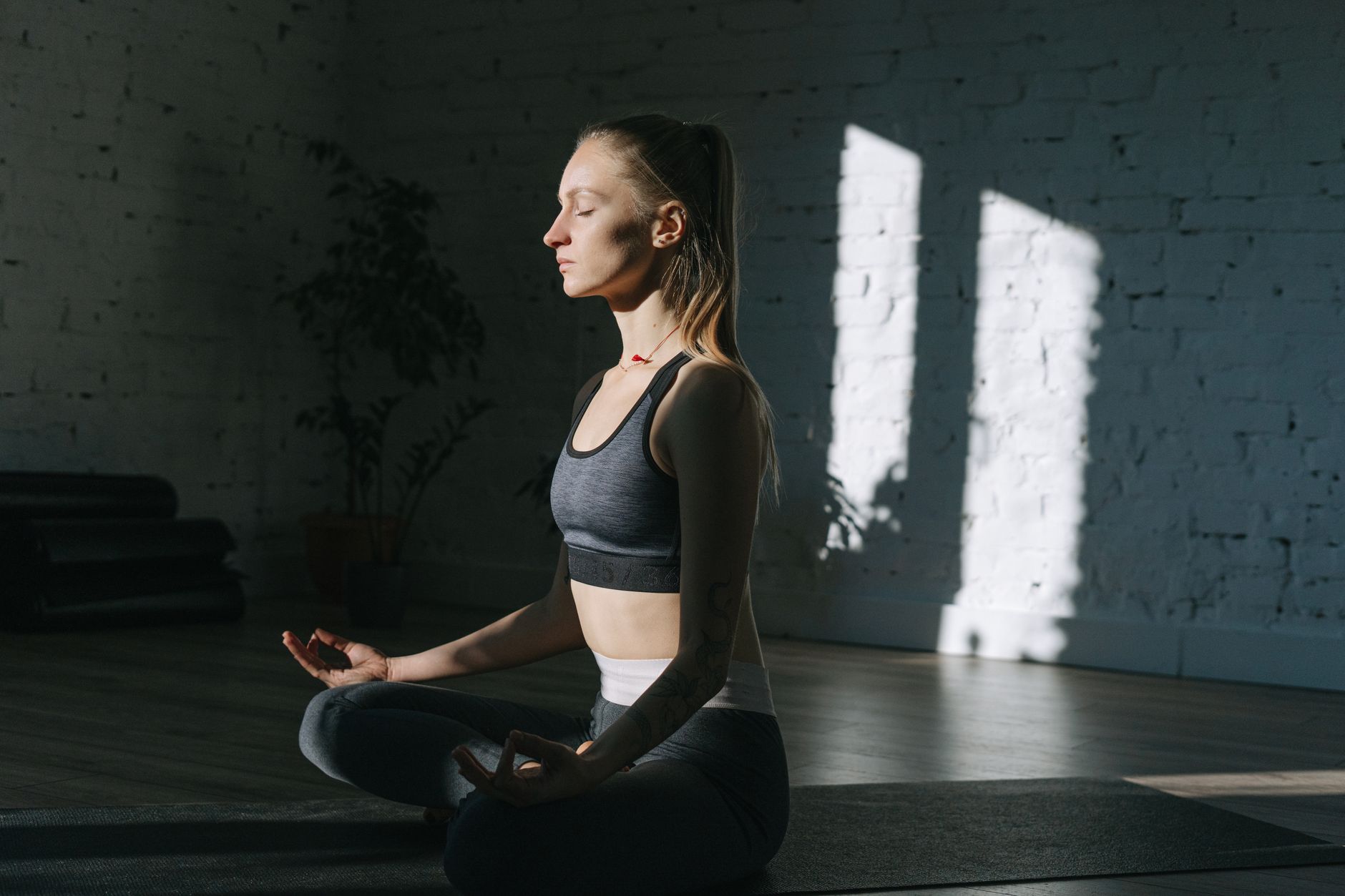
Controlled breathing is one of the most immediate tools available — and it works through a direct physiological mechanism. When you slow your breath and breathe deeply into the diaphragm, you activate the parasympathetic nervous system (your body's "rest and digest" mode), which directly counters the fight-or-flight response that underlies acute anxiety.
A 2023 study published in Frontiers in Psychology found that just five minutes of diaphragmatic breathing significantly reduced both self-reported anxiety and salivary cortisol levels in participants. The effects were measurable after a single session.
Box breathing — the 4-4-4-4 technique:
- Inhale slowly through your nose for 4 counts
- Hold for 4 counts
- Exhale slowly through your mouth for 4 counts
- Hold for 4 counts
Repeat 4–6 cycles. The entire practice takes under three minutes. Many people find that doing this twice daily — once in the morning and once before sleep — produces a noticeable reduction in baseline anxiety within two to four weeks of consistent practice.
Research from Stanford University's lab also suggests that the "physiological sigh" (a double inhale through the nose followed by a long exhale) is the fastest single breath pattern for reducing acute stress, cutting arousal in roughly 30 seconds.
2. Progressive Muscle Relaxation (PMR): Releasing Tension From the Body Up
Developed by Dr. Edmund Jacobson in the 1920s, Progressive Muscle Relaxation has accumulated over a century of supporting evidence. Research published in the Journal of Anxiety Disorders suggests regular PMR practice can reduce generalized anxiety symptoms by 30–40% in clinical settings.
The logic is simple: anxiety lives in the body. When we're anxious, we unconsciously hold tension in our muscles — shoulders, jaw, hands, abdomen. PMR teaches your nervous system to recognize and actively release that tension through deliberate contrast: tense, then release.
A basic PMR sequence (15–20 minutes):
- Find a quiet, comfortable position (lying down works best)
- Starting at your feet: tense the muscles firmly for 5–7 seconds
- Release completely and notice the sensation for 20–30 seconds
- Work upward: calves → thighs → abdomen → hands → forearms → shoulders → face
Many people find that the release phase — the flooding sense of relaxation after the tension — becomes progressively deeper with regular practice. Research suggests four to six weeks of daily sessions produces the most durable results.
3. CBT-Based Thought Records: Rewiring Anxious Patterns
Cognitive Behavioral Therapy (CBT) is widely recognized as the gold-standard psychological treatment for anxiety disorders. While working with a licensed therapist is ideal, research also supports self-directed CBT techniques for mild-to-moderate anxiety.
A landmark 2021 meta-analysis in JAMA Psychiatry found CBT effective for reducing anxiety symptoms in 50–60% of cases, with benefits that persisted well beyond the treatment period. The mechanism: CBT gradually restructures the automatic thought patterns that fuel anxiety, not just the symptoms.
The thought record technique — 6 steps:
- Write down the specific anxious thought ("I'm going to fail this presentation")
- Rate your anxiety 0–10
- List the evidence supporting the thought
- List the evidence against the thought
- Write a balanced, realistic alternative ("I've prepared well and have presented successfully before")
- Re-rate your anxiety
Research suggests this structured process — done consistently over weeks — gradually weakens the neural pathways associated with catastrophic thinking. You're not forcing positivity; you're building a more accurate relationship with uncertainty.
4. Mindfulness-Based Stress Reduction (MBSR): The Evidence Is Solid
Developed at the University of Massachusetts Medical School by Jon Kabat-Zinn, MBSR has become one of the most rigorously studied mindfulness interventions available. A 2024 systematic review in JAMA Internal Medicine analyzed 47 randomized controlled trials and found that MBSR programs produced moderate-to-large reductions in anxiety, depression, and pain — with benefits maintained at six-month follow-up.
The core practice is deceptively simple: intentional, non-judgmental awareness of the present moment. What makes it powerful for anxiety specifically is that it targets rumination — the repetitive mental cycling about future threats that characterizes anxious thinking.
Getting started with MBSR-based mindfulness:
- Begin with just 5–10 minutes daily (consistency matters more than duration)
- Sit comfortably, close your eyes, and focus on the sensation of breathing
- When your mind wanders (it will — this is normal), gently redirect attention without self-judgment
- Expand gradually to 20–30 minutes over several weeks
Many people find that even two weeks of consistent practice measurably improves their ability to tolerate uncertainty — which research identifies as the core cognitive driver of generalized anxiety. Apps like Headspace and Insight Timer offer structured MBSR programs, though studies suggest the specific platform matters less than daily consistency.
5. Exercise: Possibly the Most Underrated Anxiety Intervention
The research on physical exercise and anxiety is both robust and surprising in its effect size. A comprehensive 2023 meta-analysis in the British Journal of Sports Medicine — analyzing over 1,000 trials involving more than 128,000 participants — concluded that exercise was 1.5 times more effective than medication or counseling alone for reducing mild-to-moderate anxiety and depression.
The mechanisms are multiple: exercise releases endorphins and endocannabinoids, reduces pro-inflammatory cytokines (elevated inflammation is strongly linked to anxiety disorders), improves sleep architecture, and builds a sense of self-efficacy that generalizes to other life domains.
Evidence-based exercise targets for anxiety reduction:
- Aerobic exercise: 150 minutes/week of moderate intensity (brisk walking, cycling, swimming) — meets the WHO physical activity guidelines and has the most research support
- Resistance training: 2–3 sessions/week shows comparable anxiety benefits to cardio in several RCTs
- Yoga: Multiple randomized trials support yoga's specific effectiveness for anxiety, attributed to its integration of movement, controlled breathing, and mindfulness
Critically: research consistently shows that consistency beats intensity for anxiety management. A 20-minute daily walk outperforms an occasional intense gym session. The goal is regular activation of the systems that regulate stress — not athletic performance.
6. Sleep Hygiene: Breaking the Anxiety-Insomnia Loop
Anxiety and poor sleep exist in a well-documented vicious cycle. Research from Matthew Walker's lab at UC Berkeley has shown that sleep deprivation amplifies amygdala reactivity (the brain's fear center) by up to 60%, while simultaneously weakening the prefrontal cortex's capacity to regulate emotional responses.
A 2025 study published in Nature Mental Health found that improving sleep quality through behavioral interventions reduced anxiety symptoms in 58% of participants — even without directly addressing the anxiety itself. Sleep is not passive recovery; it is active emotional processing.
Research-supported sleep hygiene practices:
- Maintain a consistent sleep-wake schedule, including weekends (circadian rhythm stability is key)
- Keep your bedroom cool — research points to 65–68°F (18–20°C) as optimal for sleep onset
- Avoid screens 60–90 minutes before bed; blue light suppresses melatonin production by up to 50%
- Cut off caffeine after 2 PM — its half-life is 5–7 hours, meaning half of a 3 PM coffee is still active at 10 PM
- If you wake anxious at 3 AM and can't return to sleep within 20 minutes, consider briefly leaving bed — this helps prevent the "bed equals anxiety" association that worsens chronic insomnia
7. Nature Exposure and Intentional Digital Detox
One of the most compelling newer research directions involves the combination of natural environments and reduced digital stimulation. A 2024 Stanford study found that 90-minute walks in natural settings (compared to urban walks) significantly reduced activation in the subgenual prefrontal cortex — a region strongly associated with repetitive negative thinking and rumination. This is a brain region, not just a mood.
A large-scale analysis using UK Biobank data found that people who spent at least 2 hours per week in natural environments reported significantly better mental health and wellbeing compared to those who spent none — and the effect was consistent across age, ethnicity, and socioeconomic background.
On the digital side: a 2023 study in the Journal of Social and Clinical Psychology found that limiting social media use to 30 minutes per day led to significant reductions in anxiety and loneliness over just three weeks. The comparison group, which used social media as usual, showed no improvement.
Practical implementation:
- Schedule at least 2 cumulative hours in green or blue spaces (parks, rivers, coastlines) weekly
- Try a "phone-free morning" — delay checking your phone for the first 30 minutes after waking
- Practice "green exercise" by combining nature walks with movement to compound benefits
- Designate one afternoon per week as a partial digital detox
When Self-Help Isn't Enough
These seven techniques represent some of the best-supported tools in the anxiety management toolkit. Research suggests that combining multiple approaches — rather than relying on any single strategy — produces the strongest and most durable outcomes.
However, if your anxiety has persisted for more than six months, is causing you to avoid important activities, or is significantly affecting your relationships or work performance, please consult a qualified mental health professional. Many people find that the combination of professional therapy (particularly CBT), medication when appropriate, and lifestyle interventions like those described here produces results that none of these approaches achieves alone.
Your nervous system is adaptive. With consistent, evidence-based inputs, it can learn regulation as readily as it learned to worry.
References
-
World Health Organization. (2023). Mental disorders: Key facts. WHO Fact Sheet. https://www.who.int/news-room/fact-sheets/detail/mental-disorders
-
Banushi, B., et al. (2023). Breathwork Interventions for Adults with Clinically Diagnosed Anxiety Disorders: A Scoping Review. Brain Sciences, 13(2), 256. https://doi.org/10.3390/brainsci13020256
-
Noetel, M., et al. (2024). Effect of exercise for depression: systematic review and network meta-analysis of randomised controlled trials. BMJ, 384. https://doi.org/10.1136/bmj-2023-075847
-
Goldberg, S.B., et al. (2018). Mindfulness-based interventions for psychiatric disorders: A systematic review and meta-analysis. Clinical Psychology Review, 59, 52–60. https://doi.org/10.1016/j.cpr.2017.10.011
-
Bratman, G.N., et al. (2015). Nature experience reduces rumination and subgenual prefrontal cortex activation. Proceedings of the National Academy of Sciences, 112(28), 8567–8572. https://doi.org/10.1073/pnas.1510459112
Related Articles
- Daily Anxiety Management: 10 Science-Backed Techniques — Anxiety affects millions worldwide, but small daily habits can make a profound difference. Here are
- 12 Daily Anxiety Management Techniques That Actually Work — Anxiety affects millions globally, but small daily habits can make a profound difference. These 12 r
- 10 Daily Habits That Actually Calm Anxiety, Backed by Science — Anxiety affects nearly 1 in 3 adults globally. The good news? Research suggests small, consistent da